The Journey of a Raindrop Through the Mohican Watershed
ave you ever watched a raindrop hit your windshield and wondered where it ends up? Probably not. Most of us are more concerned with whether we remembered to roll up the car windows or if the dog made it inside before the downpour started.

But every raindrop that falls in Ashland County embarks on an incredible journey—one that connects our farms, neighborhoods, businesses, parks, and streams. In fact, that raindrop may eventually become part of the Mohican River, helping create the scenic waterway that draws thousands of visitors each year to canoe, kayak, fish, swim, and explore.
In fact, the story of the Mohican River begins with a single drop of rain. Imagine standing outside during a summer thunderstorm.
A raindrop lands on your roof. Another lands in a soybean field. Another splashes onto a parking lot downtown. Each begins traveling downhill, pulled by gravity toward the nearest ditch, stream, creek, or river.
That entire area of land draining to a common waterway is called a watershed. Think of a watershed as nature's plumbing system. Every backyard, farm field, road, woodland, and pasture in Ashland County is connected through a network of waterways that eventually feed the Mohican River.
Whether you live in Loudonville, Ashland, Perrysville, Hayesville, Jeromesville, or somewhere in between, you're part of the Mohican watershed story. The interesting thing about watersheds is that water doesn't care about property lines, township boundaries, or whether you're a farmer, homeowner, or business owner. What happens upstream affects what happens downstream.
But not every raindrop has a smooth ride. In a perfect world, our raindrop would slowly soak into healthy soil, filtering naturally through plant roots and underground layers before reaching a stream. Unfortunately, the journey isn't always so clean.
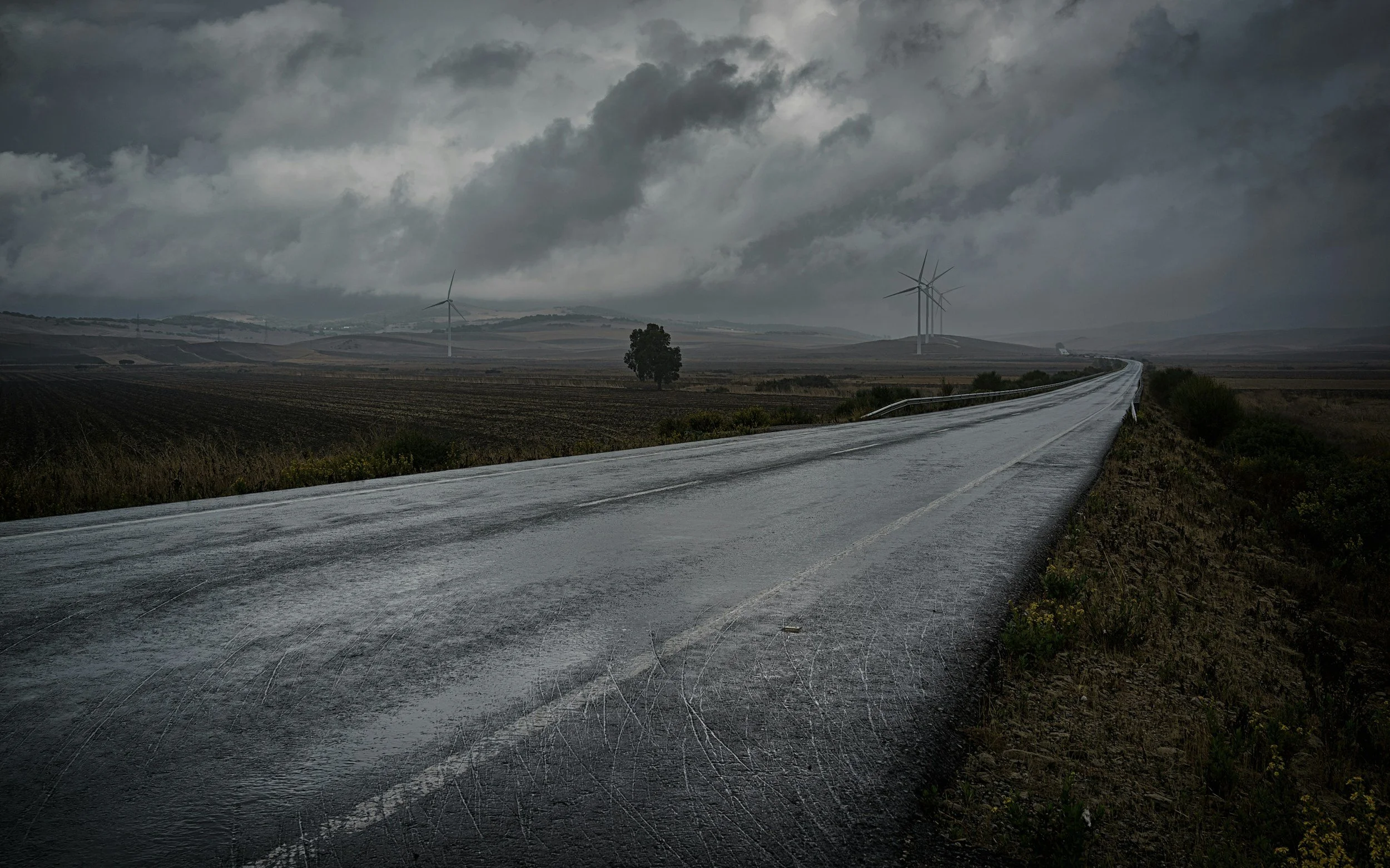
When rain falls on compacted soil, pavement, rooftops, or overgrazed pasture, it often runs across the surface instead of soaking in. Along the way, it can pick up sediment, fertilizers, pet waste, motor oil, bacteria, road salt, and other pollutants. By the time that water reaches a creek, it may be carrying far more than just H₂O.
In the Mohican watershed, some of the most common water quality challenges include excess sediment, nutrients such as phosphorus and nitrogen, bacteria like E. coli, streambank erosion, and altered stream habitat.
These impairments don't typically come from a single source. Instead, they result from thousands of small decisions made across the landscape every day. That's both the challenge—and the opportunity.
For farmers, protecting water quality often starts with keeping soil where it belongs. When topsoil leaves a field, valuable nutrients leave with it. Nobody wants to watch their fertilizer investment float downstream during the next thunderstorm.

Practices such as cover crops, no-till or reduced-till systems, grassed waterways, nutrient management planning, rotational grazing, and livestock exclusion fencing help reduce runoff while improving soil health and productivity. Healthy soil acts like a sponge. It absorbs rainfall, reduces erosion, and helps recharge groundwater. The bonus? Many conservation practices improve farm resilience during both wet and dry weather.
But, you don't need hundreds of acres to influence water quality. If you own a few acres, maintaining septic systems, planting native vegetation, stabilizing streambanks, managing livestock access to waterways, and minimizing unnecessary fertilizer applications can all make a significant impact.

Many bacteria impairments in rural watersheds can be traced to failing septic systems, unmanaged runoff, or direct livestock access to streams. A little maintenance today can prevent a much bigger problem tomorrow.
In towns and cities, it's easy to forget that storm drains typically flow directly into local waterways. Unlike wastewater, stormwater often receives little or no treatment before entering creeks and streams. That means grass clippings, pet waste, litter, motor oil, leaves, and excess fertilizer can all end up in local waterways after a rainstorm.

Simple actions matter. Pick up after pets. Sweep driveways instead of hosing them off. Use fertilizers responsibly. Plant trees and native landscaping. Consider rain barrels or rain gardens to capture runoff. Every gallon of water that soaks into the ground is one less gallon carrying pollutants downstream.
So you may wonder, what can one person really do? It’s a fair question. After all, the Mohican watershed covers hundreds of square miles. Can one person really make a difference? Absolutely.
Water quality improvement rarely happens because of one massive project. It happens because thousands of people each make small changes that collectively add up to meaningful results.
One homeowner plants a rain garden. One farmer seeds a cover crop. One family maintains their septic system. One volunteer collects water quality data. Together, those actions improve the watershed for everyone.

One of the most exciting ways residents can make a direct impact is by participating in Ashland Soil and Water Conservation District's volunteer water quality monitoring program. Volunteers help collect valuable information about local streams and rivers throughout the Mohican River watershed. This data helps track current conditions, identify trends, evaluate conservation efforts, and measure improvements over time.
The information gathered by citizen scientists helps local partners better understand where water quality challenges exist and whether conservation programs are achieving measurable results. No advanced science degree is required—just curiosity, a willingness to learn, and a desire to help protect one of Ashland County's most valuable natural resources.
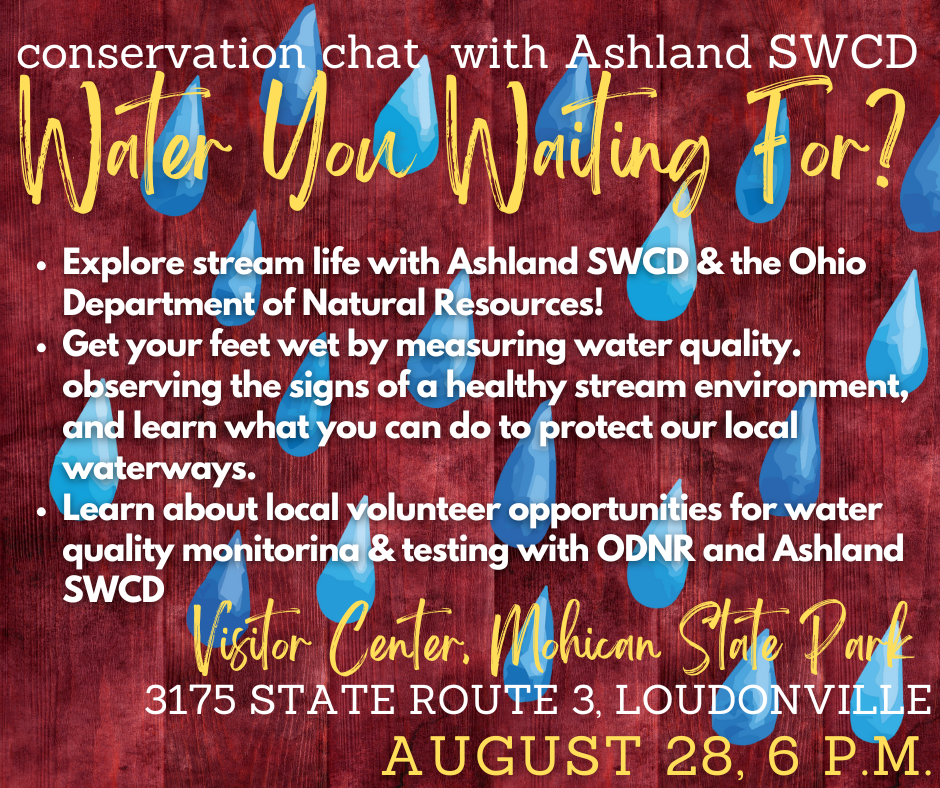
In fact, the district hosts training opportunities for potential volunteers, where they can literally get their feet wet in water quality sampling. One such event will take place this August 28 at the Mohican State Park Visitor Center; you can RSVP at wateryourwaitingfor.eventbrite.com
The next time a summer thunderstorm rolls across Ashland County, take a moment to think about where those raindrops are headed. Each raindrop has its own story. Some will fall on farm fields. Some will land on rooftops. Others will splash into backyards, parking lots, forests, and pastures. Eventually, many of them will find their way to the Mohican River.
The question is: what will they carry with them when they get there? The answer depends on all of us. Because protecting water quality isn't just the responsibility of farmers, homeowners, businesses, or government agencies. It's a shared responsibility that begins wherever the next raindrop falls.
And in the Mohican watershed, that means right outside your door. For more information on how you can make a difference, contact Ashland SWCD at 419-281-7645.