No-Till & Reduced Till: Getting Fields Ready the Right Way
If there’s one thing I’ve learned working with farmers across Ashland County, it’s this: soil likes to be left alone.
I know — that sounds a little ironic coming from someone in conservation. Farmers are natural fixers. We tweak. We improve. We make one more pass just to be sure. So the idea of not doing something — like tilling — can just feel..well, wrong. But when it comes to getting fields ready, sometimes the smartest move is to step back and let biology do the heavy lifting.

March is when that tractor seat starts calling your name. The snow melts, frost slips out of the ground, and the urge to work soil is strong. Before you answer that call, let’s talk about no-till and reduced tillage — and why your soil (and our streams) will thank you.
First, soil is not “just dirt.” Healthy soil is alive. Beneath last year’s residue is a bustling underground workforce: earthworms, fungi, and microbes are hard at work. When we aggressively till, we disrupt that entire system.
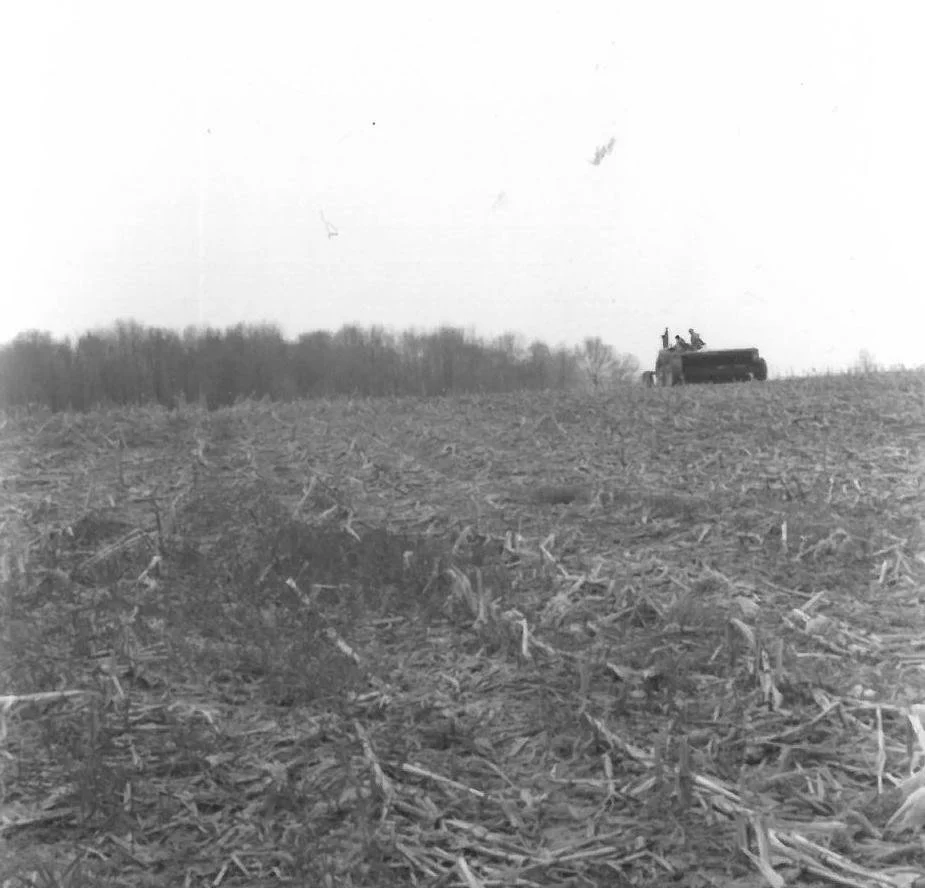
As you can see from this photo of no-till oats at the Mapleton High School farm, no-till management is nothing new. And sometimes, the things that last do so for a good reason.
No-till and reduced tillage protect soil structure. Instead of pulverizing aggregates, we preserve them. Those aggregates create pore spaces — tiny channels that allow water to soak in instead of ponding or running off. And when those heavy spring rains hit (because they always do), fields with residue cover absorb more water and lose less soil.
That’s where soil health meets water quality.
What leaves the field doesn’t just disappear. When soil washes away, it ends up in ditches, creeks, and eventually waterways like the Mohican River and even Lake Erie. Along with that soil goes phosphorus and nitrogen — nutrients farmers paid good money for.
No-till systems help keep soil anchored in place. Crop residue acts like armor, softening the blow of raindrops and reducing erosion. Better infiltration means less runoff and nutrients in local waterways. The result? Clearer streams, more stable banks, and fewer downstream water quality problems.

Ashland County farmer and former SWCD board member David Elson no-tills into his rye cover crop.
In short: what stays on your field works for you. What leaves your field works against you.
Reduced tillage doesn’t mean doing nothing. It means being strategic.
Instead of making multiple passes to prepare a seedbed, no-till drills cut through residue, place seed at the proper depth, and ensure good seed-to-soil contact — all in one pass. Fewer trips across the field means lower fuel costs, less wear and tear on equipment, less compaction, and more time for the thousand other things competing for attention in the spring.
And let’s talk about compaction. Wet spring soils and heavy equipment are not good friends. Each tillage pass increases the risk of creating compaction layers that restrict root growth and limit water infiltration. Minimizing traffic helps maintain the soil structure we’re trying so hard to build.
About this time, I usually hear: “That sounds great, but I don’t own a no-till drill.”
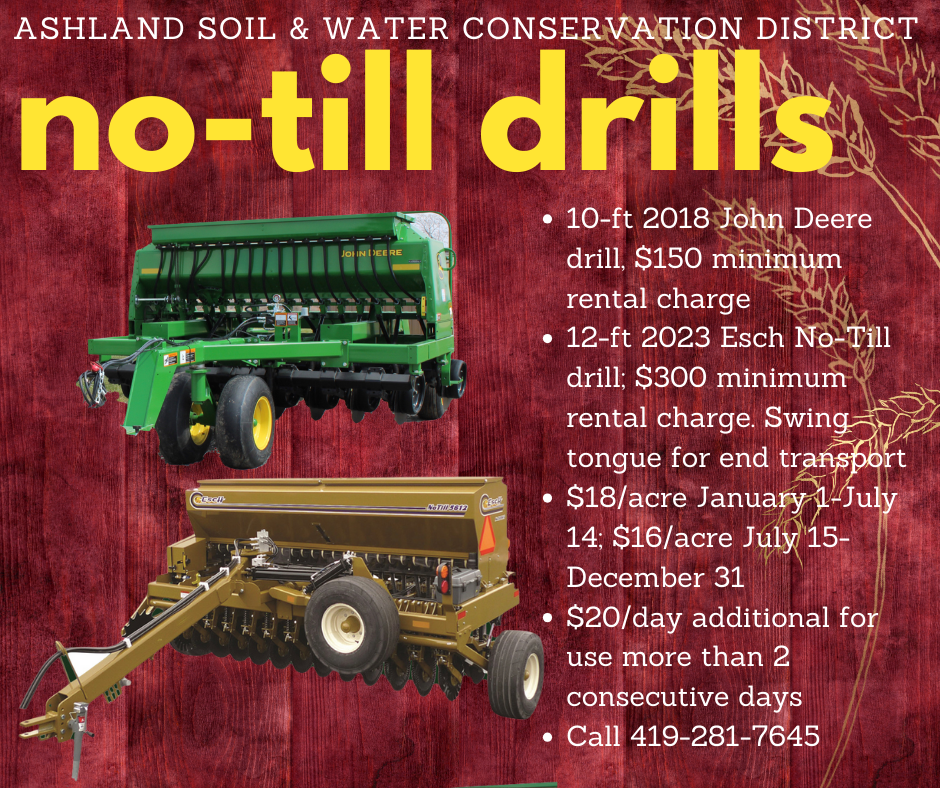
That’s where we come in.We understand that transitioning to no-till or adding cover crops can feel like a big leap — especially if you’re not ready to invest in specialized equipment. That’s why we offer an equipment rental program designed to make conservation practical and affordable.
We currently have a 12-foot John Deere no-till drill and a 10-foot Esch no-till drill for larger acreage and efficient planting. For smaller plots or tighter areas, we offer a 5-foot Woods ground-driven seeder. If you’re incorporating cover crops, our cover crop crimper/roller allows for mechanical termination while leaving a protective mulch layer in place. And for small operations looking to better manage nutrients, we have a small ground-driven Lancaster manure spreader.

These tools are available to producers across the county who want to try no-till, seed cover crops, improve pastures, or fine-tune nutrient management — without committing to a major equipment purchase upfront.
One of the biggest benefits we hear from producers who’ve transitioned to reduced tillage is resilience. In wet springs, their fields dry more evenly because water infiltrates instead of sitting on the surface. In dry summers, residue helps conserve moisture. Over time, organic matter increases, soil becomes more manageable, and inputs can often be used more efficiently.
It’s not magic. It’s management.
That doesn’t mean there isn’t a learning curve. Residue management, planter adjustments, and timing all take attention. But agriculture has always been about adapting and improving. No-till and reduced tillage are powerful tools that help us farm smarter while protecting the resources we depend on.
Every decision we make in March echoes through the rest of the growing season — and beyond.
If you’re curious about trying no-till, adding cover crops, or just reducing a few tillage passes this spring, give our office a call. We’re happy to walk fields, talk through options, and help find the right equipment for your goals.
Because sometimes the best thing we can do for our soil… is less.
And that might just be the most productive decision you make all year.