Some things run in the family—including conservation
Some family traditions involve holiday recipes, heirlooms or stories that get better every time they’re told. At Twin Oak Farm, the family tradition is a little more dirt-under-your-fingernails: take care of the land.
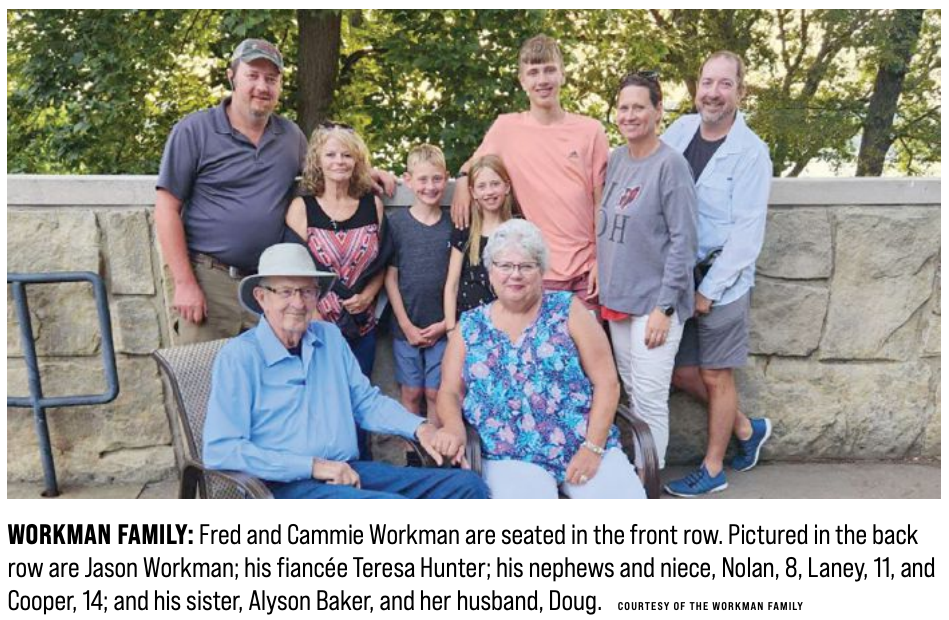
For seven generations, the Cowen family—and now the Workman and Cowen families—have farmed the same ground near Perrysville. For four of those generations, they have also been partners with the Ashland Soil and Water Conservation District. That remarkable legacy is why the Ashland SWCD Board of Supervisors unanimously selected Twin Oak Farm and the Workman and Cowen families as the recipient of the 2026 Ashland SWCD Horizon Award.
The Horizon Award recognizes conservation groundbreakers and innovators who have made a lasting difference in the history of soil and water conservation in Ashland County. And Twin Oak Farm doesn’t just have a conservation history. They’re practically part of the district’s DNA.
“A farm like Twin Oak reminds us that conservation isn't about chasing the newest practice or checking a box,” said Ashland SWCD Director Jane Houin. “It's about having the long view—knowing that the decisions you make today are going to affect the people who farm this ground decades from now.”
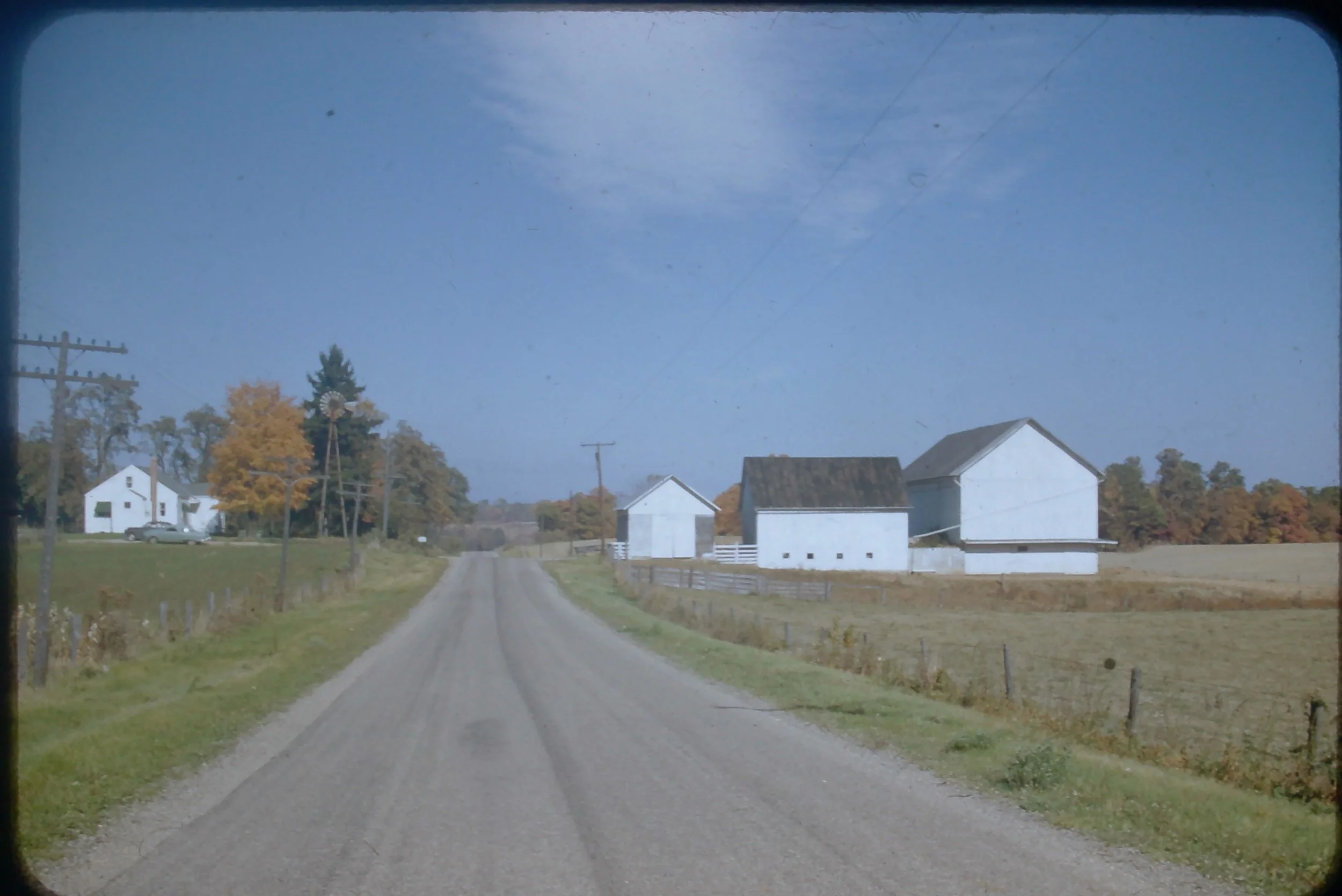
What began as the Cowen farm in 1831 is now known as Twin Oak Farm—but while the name has changed, the family’s commitment to caring for the land has stayed remarkably consistent. From Joseph Cowen’s early conservation work to today’s no-till fields, contour strips, rotational grazing and livestock exclusion practices, generation after generation has continued to invest in the health of the farm. And now, the farm’s story takes its place among Ashland County’s conservation pioneers as Twin Oak Farm and the Workman and Cowen families are named the 2026 Ashland SWCD Horizon Award recipients.
The story begins in 1831, when Joseph Cowen, an immigrant from Ireland, acquired the property. Seven generations later, the Cowen family is still farming the land. Joseph’s son, William, and grandson, Philpot, continued the family farm while also serving the community as attorneys.
One of Philpot’s sons, Joseph Cowen, would go on to become one of the original board members of the newly formed Ashland Soil and Water Conservation District in 1944. That was more than a board appointment. It marked the beginning of a conservation partnership that would span generations.
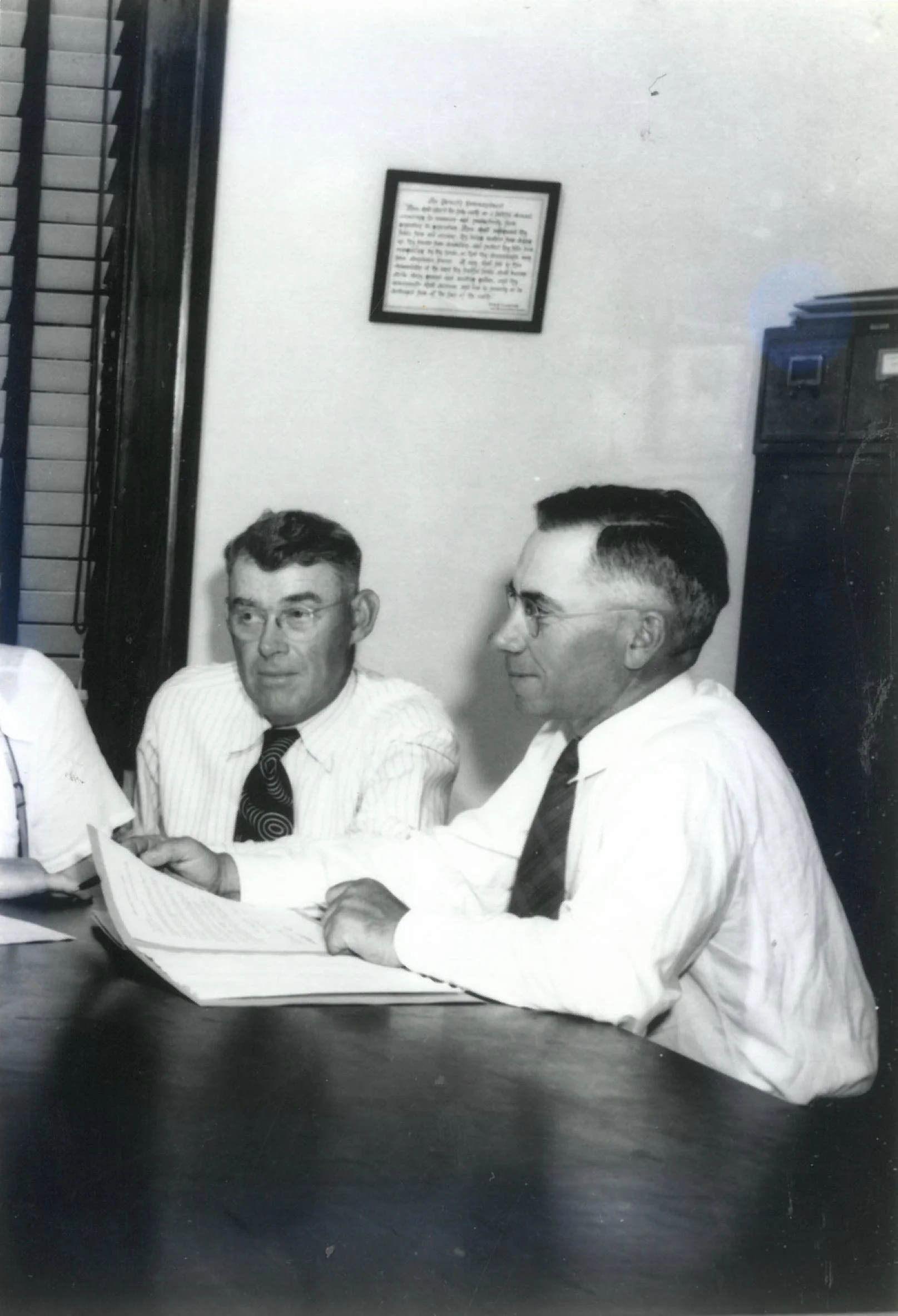
Pictured here are Joseph Cowen (left) and Roy Kettering, two early leaders in Ashland County’s soil and water conservation story. Joseph Cowen was a charter board member of the newly formed Ashland Soil and Water Conservation District in 1944, helping lay the groundwork for a conservation partnership that would span generations. Roy Kettering joined the board in 1947, adding his leadership to the district’s early years.
“Joseph Cowen was thinking about soil and water conservation before our district even had a name,” Houin added. “Seven generations later, his family is still putting those principles into practice. That is exactly what the Horizon Award is meant to recognize.”
Joseph was also the first farmer in Ashland County to use contour farming techniques in the late 1930s, working with Civilian Conservation Corps workers. Those original contour strips were about 80 feet wide. Today, the farm’s strips have grown to approximately 200 feet. In other words, Joseph was thinking about keeping soil on the hill and out of the creek long before “soil health” became a buzzword.
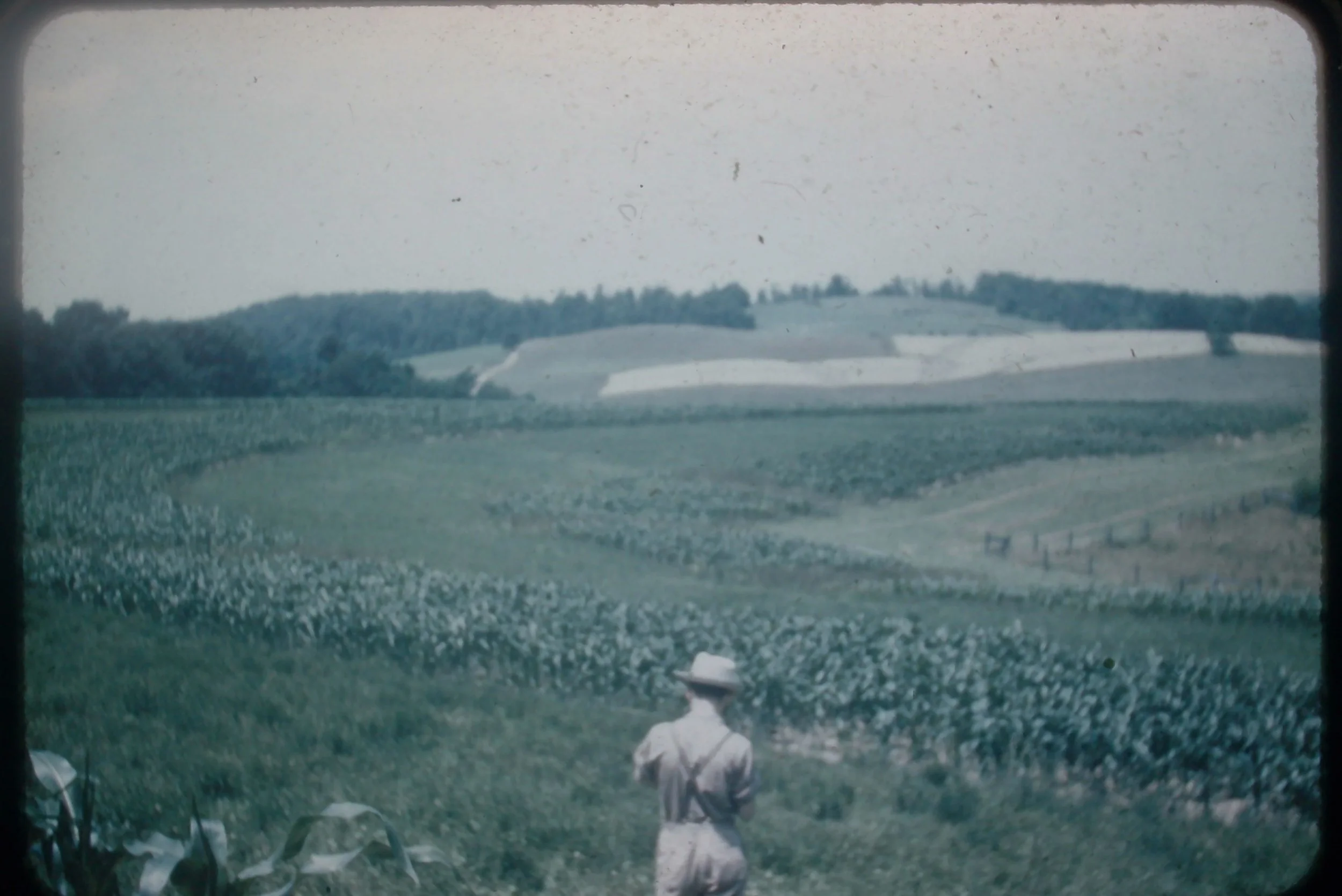
This historic photo shows the first contour farming strips used in Ashland County, established on the Cowen farm with help from Civilian Conservation Corps workers in the late 1930s.
So, what exactly are those stripes across the hillside? Contour farming means working across the slope instead of straight up and down the hill. By following the natural contours of the land, each row helps slow water down rather than giving it a straight downhill racetrack. The result? More water has a chance to soak into the soil, while valuable topsoil is less likely to wash away.
Joseph’s son, Barry “Grandpa” Cowen, continued the family tradition. Barry raised cattle, was known as an expert butcher and woodsman, and—perhaps unsurprisingly—followed his father into conservation leadership by also serving on the Ashland County Soil & Water Conservation District board.

Pictured here are H.C. Bernhard, Barry Cowen, Harley Heffelfinger, Eugene Welch, Bob Denney and Don Coffman, representing a generation of Ashland County conservation leaders.His father, Joseph Cowen, was one of the original board members of the newly formed Ashland Soil and Water Conservation District in 1944, helping establish a conservation legacy that would stretch across generations. Barry followed in his father's footsteps, serving as a longtime board member of the Ashland Soil and Water Conservation District while continuing to farm the family’s 1831 homestead. Like his father, Barry understood that good farming meant more than producing a crop—it meant leaving the soil, water and land in good shape for the farmer who would come next.
The family farm changed hands again when Barry died in 1992, leaving the main homestead to his daughter, Cammie, and her family. Fred Workman and his son, Jason, continued working the farm.
In 2008, the 1831 Cowen farm officially became Twin Oak Farm, named for the two distinctive oak trees visible from the main lane, standing apart from the woods on the hill. The name was also a tribute to Grandpa Barry, who loved walking down the lane and sitting beneath those oaks, where he could look back toward his home, barns and everything he had worked so hard to build.
Today, Jason Workman, the seventh generation of the Cowen family, oversees the Twin Oak Farms operation—with plenty of help from his parents and sister. And the next generation is already waiting in the wings.

In 2016, Cammie and Jason Workman accepted Ashland SWCD’s Outstanding Cooperator of the Year award on behalf of Twin Oak Farms—another chapter in a conservation story that stretches across generations. At the time, Twin Oak Farms was recognized for the family’s commitment to conservation and responsible stewardship of the land. Today, we can look back and see just how fitting that recognition was: Twin Oak Farms has continued building on that legacy through no-till farming, contour strips, rotational grazing, livestock exclusion and other conservation practices.
The farm’s conservation philosophy is remarkably straightforward: take great care of the land. Twin Oak Farm no-tills all of its crop acreage, utilizes rotational grazing to prevent overgrazing, and has worked to fence livestock out of its creeks to reduce nutrient pollution and streambank erosion. The farm also uses contour strips to reduce topsoil erosion.
Those practices aren't simply things Twin Oak Farms talks about. They’re practices the family has continued to put to work year after year.
The farm currently grows corn, soybeans, hay and spelt, much of which is used to feed its cattle. Twin Oak Farms says land conservation remains an important part of how it operates, with no-till planting, rotational grazing and water-management practices all playing a role.
That commitment has not gone unnoticed. Twin Oak Farm has been named an Ashland SWCD Outstanding Cooperator three times—1967, 1980 and 2016—across multiple generations of the family. In 2024, the farm was also selected as the Ohio Conservation Farm Family of the Year. Now, the Horizon Award adds another chapter to that conservation history.

In 2024, Twin Oak Farm was recognized as an Ohio Conservation Farm Family at Farm Science Review—an honor that celebrates farm families going above and beyond to protect Ohio’s soil, water and natural resources. Pictured here are Jason Ruhl, Ashland NRCS District Conservationist; Cammie and Jason Workman; and Cora Crilow of Ashland SWCD, celebrating a well-deserved recognition of Twin Oak Farm’s commitment to conservation.
And yes, there are cattle. You can't tell the Twin Oak Farm story without talking about cattle. Barry Cowen originally favored Polled Shorthorns and built a herd around them. Today, Twin Oak Farms maintains a herd of approximately 70 cows, primarily Polled Shorthorns, and has significantly improved the pedigree of the herd since 2008. The family has exhibited its cattle across Ohio and at shows in South Carolina, Pennsylvania and Michigan, including the North American International Livestock Exhibition in Louisville.
The cattle operation and conservation practices go hand in hand. Rotational pastures help manage grazing pressure, while the farm's crop and hay acres provide much of the feed needed to sustain the herd. And if the next generation is any indication, the family’s relationship with cattle—and conservation—isn't ending anytime soon.
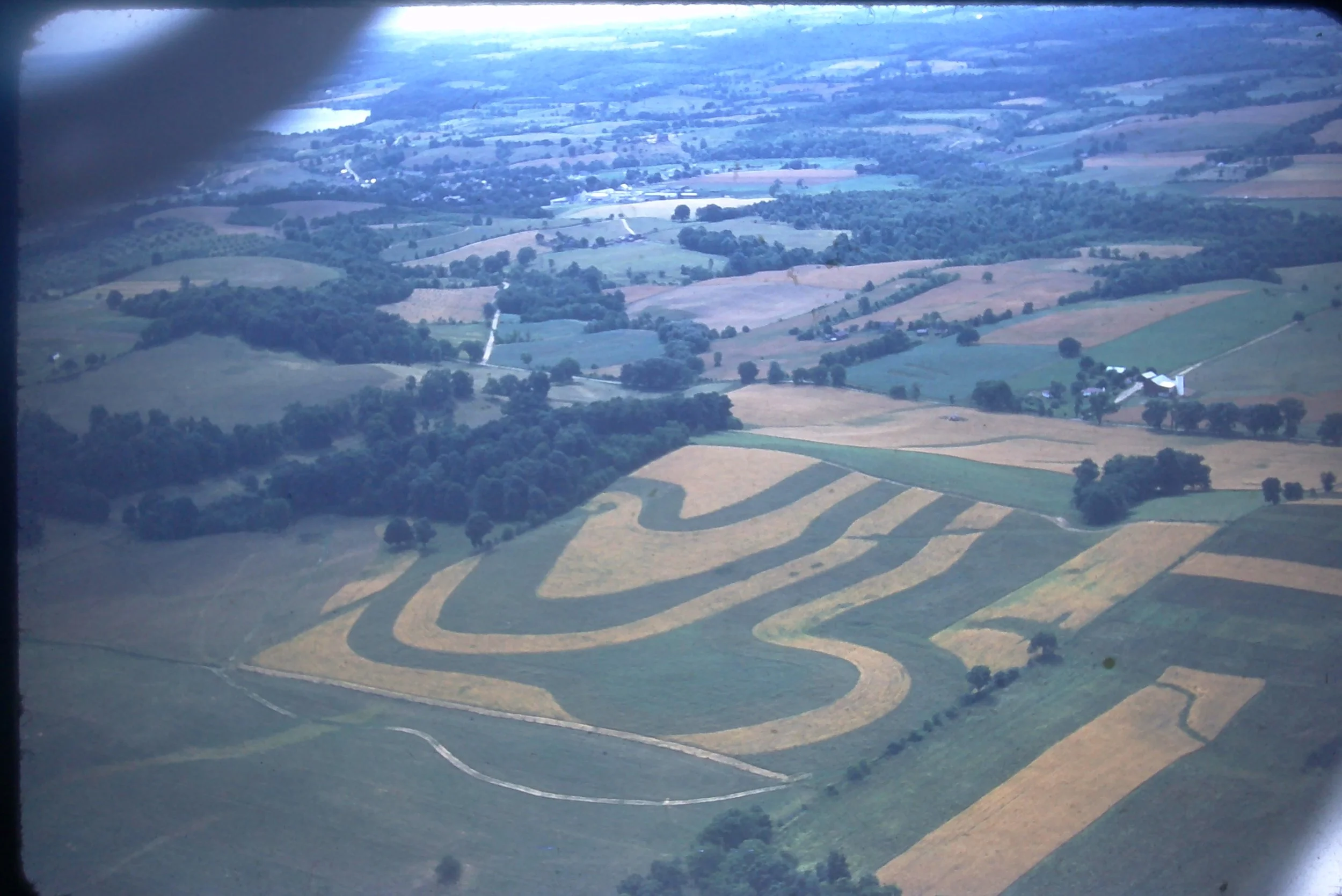
These contour farming strips at Twin Oak Farm are still in use today, generations after Joseph Cowen first put the practice to work on the family farm in the late 1930s. From the air, those sweeping strips make a pretty impressive pattern. From the ground, they’re doing an even more important job: following the natural contours of the land to slow water runoff, reduce erosion and keep valuable topsoil where it belongs—in the field.
Perhaps the most fitting part of the Horizon Award is that Twin Oak Farm doesn't represent one great conservation project or one particularly innovative year. It represents consistency.
Joseph Cowen was thinking about soil erosion when contour strips were a new idea.
Barry Cowen carried conservation leadership onto the SWCD board.
Cammie, Fred and Jason continued working the farm.
And today, Jason Workman is carrying the family operation—and its conservation ethic—into the seventh generation.

Just this summer, Twin Oak Farm once again opened its gates to the community, hosting Ashland SWCD's “Cover Your Bases” Conservation Chat on cover crops. The hands-on event gave producers an opportunity to see conservation practices in action and talk about soil health, erosion prevention and cover crop management right where the work happens—in the field.
After nearly 200 years on the same piece of ground, the family has learned a thing or two about looking toward the horizon. And if history is any indication, they aren't done yet.
That is the Twin Oak story in a nutshell. They don't just farm the land. They keep learning how to farm it better.

The Ashland SWCD Horizon Award will be presented to Twin Oak Farm and the Workman and Cowen families at the district's Annual Meeting and Conservation Chat, Forest to Flask, on November 9 at Mount Vernon Estates in Ashland.
This year’s Ashland SWCD Annual Meeting will look different than in years past. While traditionally held in August in conjunction with Ashland County Farm Bureau’s Annual Meeting, this year’s event will be entirely focused on Ashland SWCD and will be held in conjunction with the district’s November Conservation Chat: Forest to Flask.
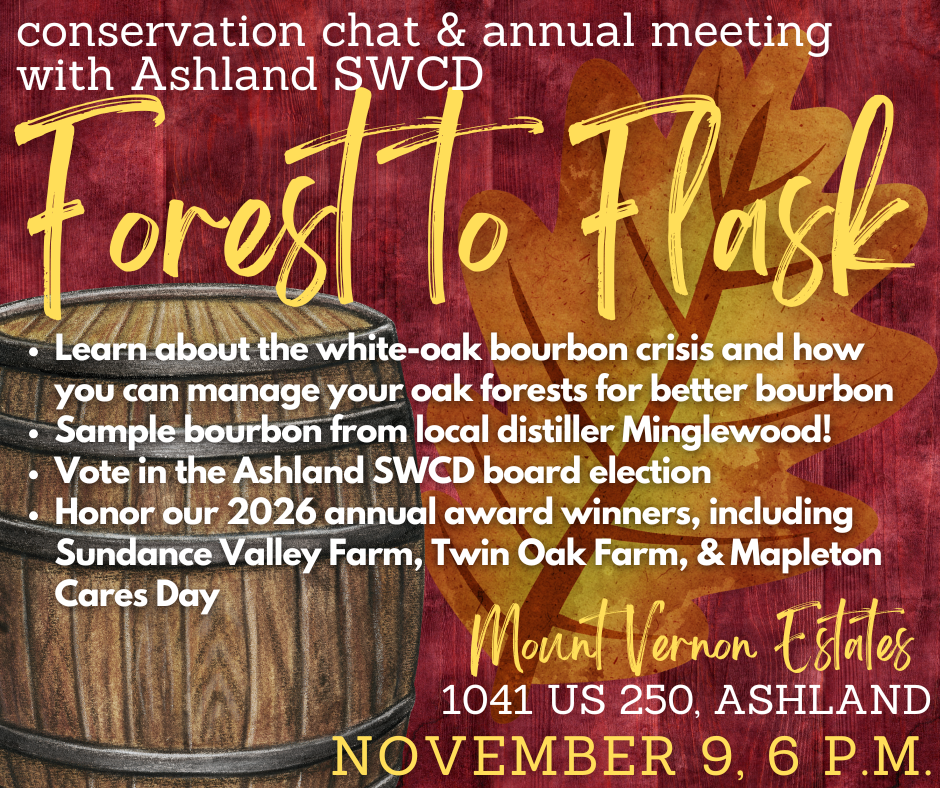
The event will feature outstanding conservation activities and cooperators over the last year as well as feature a look at the white oak bourbon crisis including a look at how woodland owners can improve their white oak stands as well as bourbon tasting featuring local distiller Minglewood Distilling. Reservations are required and can be made at foresttoflask.eventbrite.com
Ashland Soil and Water Conservation District works with landowners, farmers, businesses and community partners to protect and improve Ashland County's soil, water and natural resources through education, technical assistance and conservation leadership.