Boost Your Soil Health with Cover Crops

Whether you farm ten thousand acres, one hundred acres, or a one acre garden, we all depend on good soil health for productive crops. This seems like a no-brainer, but it’s easy to overlook. Your crops may yield well one year, but then flounder the next, leaving you distraught. No matter what crop you are managing, at the end of the day, there are two primary factors that determine whether your crop will be successful: weather and soil health. Unfortunately, we can not control the weather, but we can control the health of our soil.
Ashland County is home to tens of thousands of acres of soybeans, corn, wheat, oats, clovers, and other valuable commodities. According to the 2022 Census of Agriculture, it is estimated that roughly 149,000 acres of Ashland County are in farm land. This not only consists of row crops but also pasture land and hay fields.
With Agriculture being such a large part of our community, it is crucial for us to take care of the resources needed to sustain it for generations to come. One way to do that is to plant cover crops. Cover crops not only improve soil fertility, they also aid in building organic matter, preventing erosion, and increasing water infiltration into the soil.
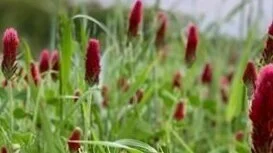
Many types of cover crops can be used and it is important to plant them with goals in mind. Legumes such as clover, alfalfa, and winter pea provide nitrogen to the soil through nitrogen fixation. Other cover crops such as rye, wheat, and oats can provide nitrogen as well as potassium and phosphorus to the soil. Some local farmers are experimenting with radishes and hairy vetch cover crops as a way to open up the soil, break down compaction, and improve drainage and nutrient content.
The thing to remember is that cover crops are an investment in the health of the soil. No investment brings instant gratification; however with some time and effort they can bring tremendous results. A healthy cover crop not only provides nutrients to the soil but also increases water holding capacity. There are countless species and varieties available on the market, each one having its own uniques traits. That is why it is important to have goals in mind when planting cover crops.

Additionally a full cover crop stand can greatly aid in preventing soil erosion. In the same way that native grasses hold together a waterway or a tree root system holds together a stream bank, cover crop root systems hold the soil together in a field during heavy rain or wind. The root systems greatly improves soil structure and the soil’s ability to firm up the ground during a wet season. It is important to add that cover crops can help prevent moisture from escaping the soil.
This helps to give our cash crops a jump start in the spring when the ground contains a certain amount of moisture. Also, the breakdown of the cover crops can provide excellent nutrient release into the soil that can give the cash crop a boost in its early stages.
As summer ends and fall begins, harvest season draws closer and closer. It is time to start laying the groundwork for an exceptional crop stand in 2026. There is no better time than the present to start prepping the soil for the upcoming crop year.
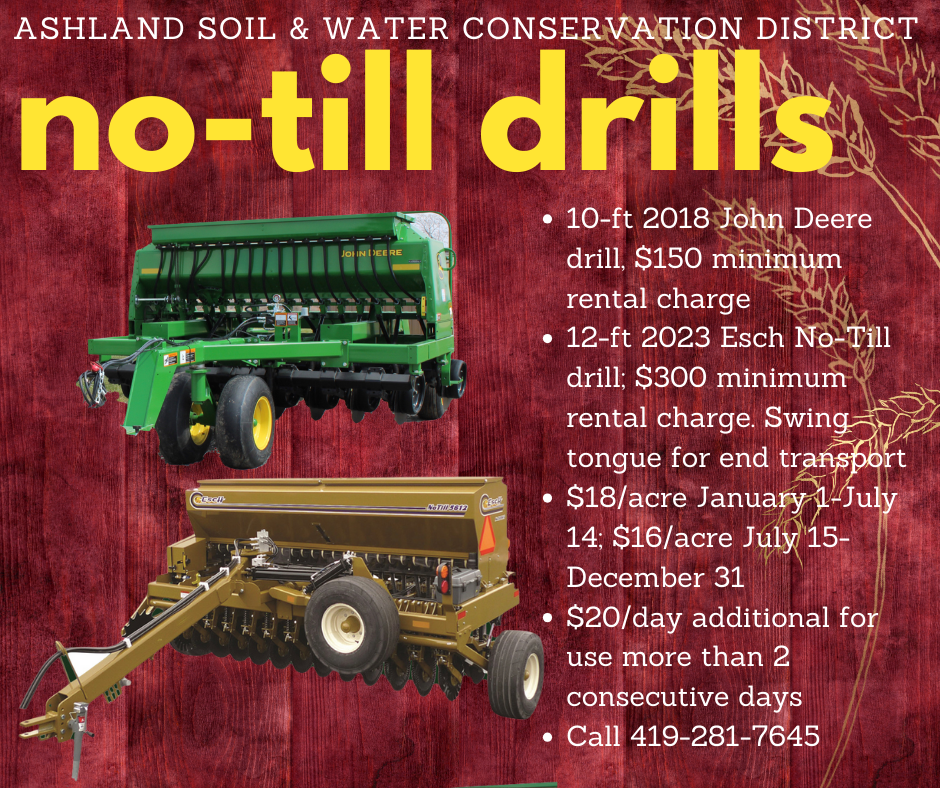
Here at Ashland Soil and Water Conservation, we work to provide a fine selection of cover crop seeding equipment to the community including a compact 5ft Woods ground driven seeder, a 10 ft John Deere 1590 no-till grain drill, and a 12ft Esch 5612 no-till grain drill. Our 10ft and 12ft grain drills are a great option for any size farm. They provide a large enough planting width and seed holding capacity to be efficient in the field and allow the farmer to move along at a good speed whether they are planting tilled or no-tilled ground. At the same time they are both compact, allowing farmers with smaller equipment to pull them without needing to own a 300 horsepower tractor.
Both drills can be pulled with tractors ranging from 60 - 120 horsepower. The 10ft drill can be rented for $16/acre with a $150 minimum rental cost and the 12ft drill can be rented for $16/acre with a $300 minimum rental cost.
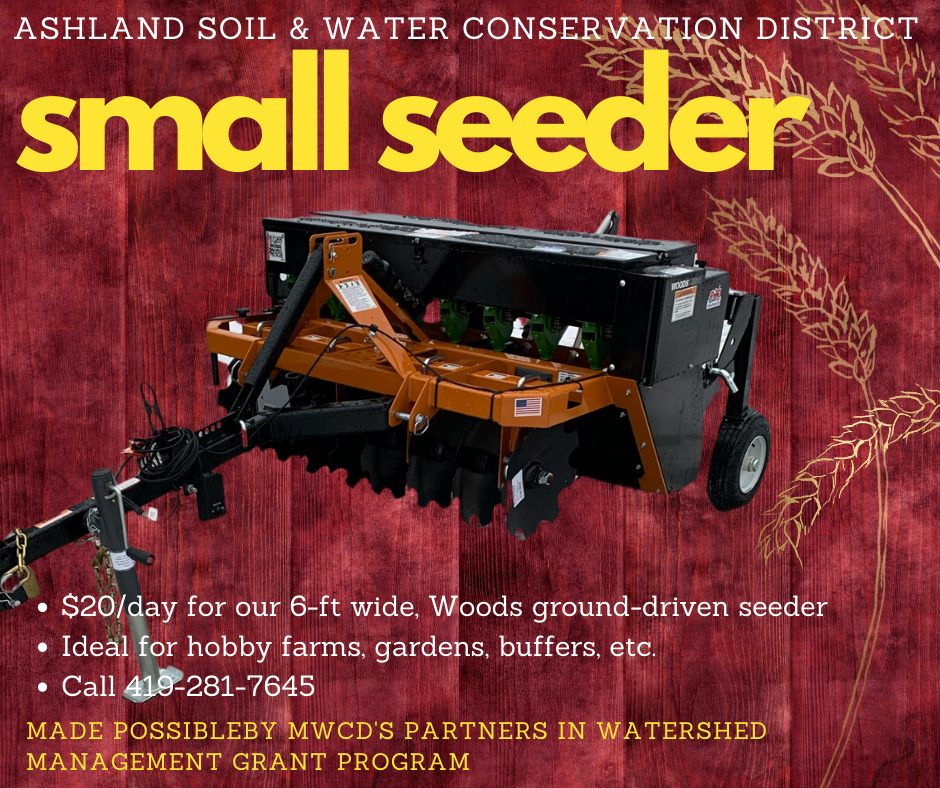

For the smaller cover crop seedings, the 5ft Woods ground driven seeder is an excellent option. Small and compact are its strengths and it can be pulled with a lightweight tractor or even a side by side. Additionally, the 5ft Woods seeder can be rented for as little as $20/day. Whether you are planting cover crops or reseeding a pasture, the 5ft seeder is a great option for any small farm or homestead.
Our team at the Ashland Soil and Water Conservation is dedicated to helping local farmers thrive on their land. Cover crops are an excellent way to increase the productivity in your soil. They are an investment into the future.
For more information on cover crops rentals of cover crop seeding equipment call Brennen Hart at Ashland Soil and Water Conservation at 419-289-4828 or visit our office at 110 Cottage Street Ashland, Ohio 44805. If you are interested in other conservation practices, visit our website at www.ashlandswcd.com