Manure Management: It’s Not Just the Same Old Crap
If you’d told my grandpa that someday we’d be talking about GPS, digital scales and variable-rate technology in the same breath as manure, he probably would’ve just shaken his head, spit, and said, “Well I’ll be.” But here we are — and honestly, it’s about time.
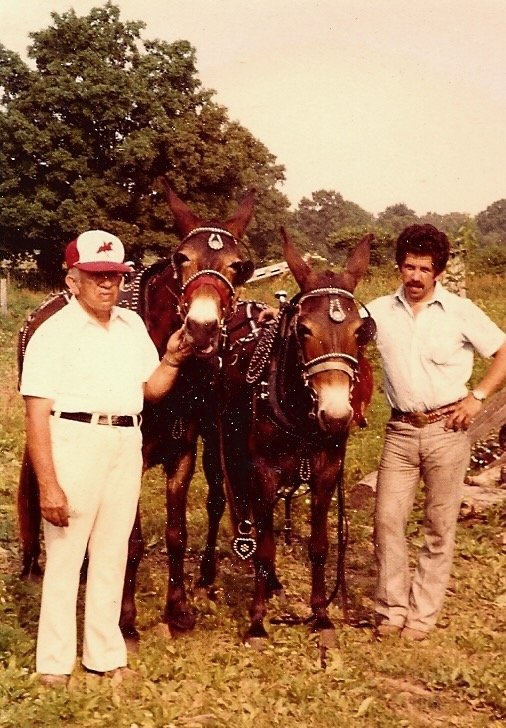
Don’t be a mule..
Ashland SWCD DIrector Jane Houin’s Papa Charles “Tater” Taft and dad Charles “Butch” Taft might have been amazed by today’s manure management technology, but our grandparents’ generation were the generation that literally put men on the moon and understand the value of embracing modern technology.
Manure management isn’t what it used to be. And that’s a good thing.
Let’s be real: manure has never been the glamorous side of farming. It’s necessary, it’s valuable, and it’s about as likely to show up on the front page as a good fence post. But over the years, it’s gone from “get it out of the barn and hope for the best” to a precision-driven, data-backed, nutrient-management powerhouse. In other words, it’s not the same old crap anymore.
That’s exactly why I’m excited about an upcoming Conservation Chat we’re hosting at Ashland Soil and Water Conservation District — appropriately titled Not the Same Old Crap. If you farm, custom apply, or just enjoy seeing how ag keeps evolving, this one’s worth your time (and your supper).
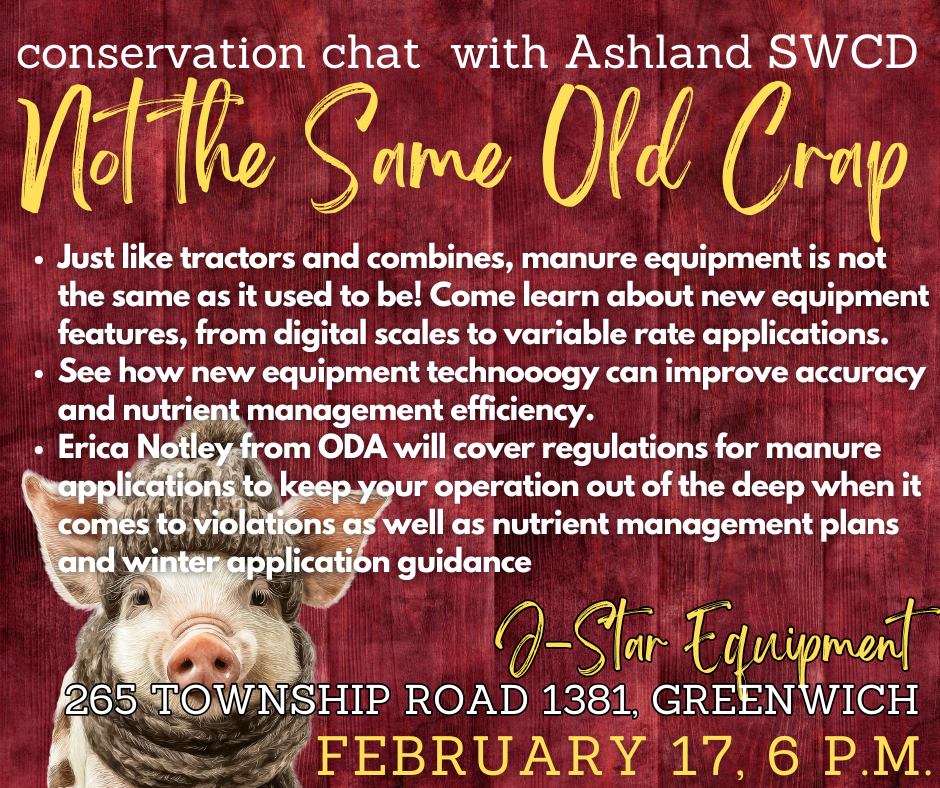
Just like tractors and combines, manure application equipment has come a long way from what grandpa used. Today’s systems can include digital scales, GPS guidance, variable-rate technology and precision controls that let operators put nutrients exactly where they’re needed — no more, no less. Better tools lead to better data, which leads to better decisions. And better decisions usually mean healthier crops, healthier soil, and a little more money left in your pocket at the end of the season.
On Feb. 17 at 6 p.m., we’ll be gathering at J-Star Equipment in Greenwich to talk through what modern manure management really looks like on today’s farms. This isn’t a sit-down-and-be-lectured kind of night. It’s a conversation — the kind where you can ask questions, swap stories, and maybe learn something new without feeling like you’re back in a classroom.
We’ll hear from Glen Arnold with Ohio State University, who will share the latest research on using liquid manure to grow forages and how equipment and management practices impact results in the field. Tubeline Manufacturing will be on hand to talk about new manure spreader technologies, including GPS systems and digital scales that make variable-rate applications more practical than ever.
And because manure management doesn’t exist in a vacuum — and nobody wants a surprise visit from a regulator — Erica Notley with the Ohio Department of Agriculture will also join the discussion. She’ll walk through current manure application regulations, nutrient management plans and winter application guidance. The goal is simple: help producers stay compliant, confident and out of trouble.
We’ll also have information available on cost-share opportunities to help cover the cost of implementing these practices. From USDA and NRCS programs to state and local options like H2Ohio, there are real dollars out there to support in-field nutrient management — if you know where to look.
At Ashland SWCD, our job is to help protect soil and water resources while keeping farms productive and practical. That means meeting farmers where they are, talking about real-world solutions, and yes, having a little fun along the way. Conservation doesn’t have to be stiff or serious all the time — sometimes it starts with supper, a good conversation, and a topic everyone pretends not to enjoy talking about.
Speaking of supper, J-Star Equipment is providing dinner, tickets are $5 per person, or free for both of you if you bring a friend. Farmers, custom applicators, and anyone interested in modern nutrient management are welcome. Tickets are available at notthesameoldcrap.eventbrite.com.
Because manure might not have changed its smell — but everything else about managing it sure has. And that’s something worth talking about.