Let’s Keep This Christmas (and Our Farm Fields) White
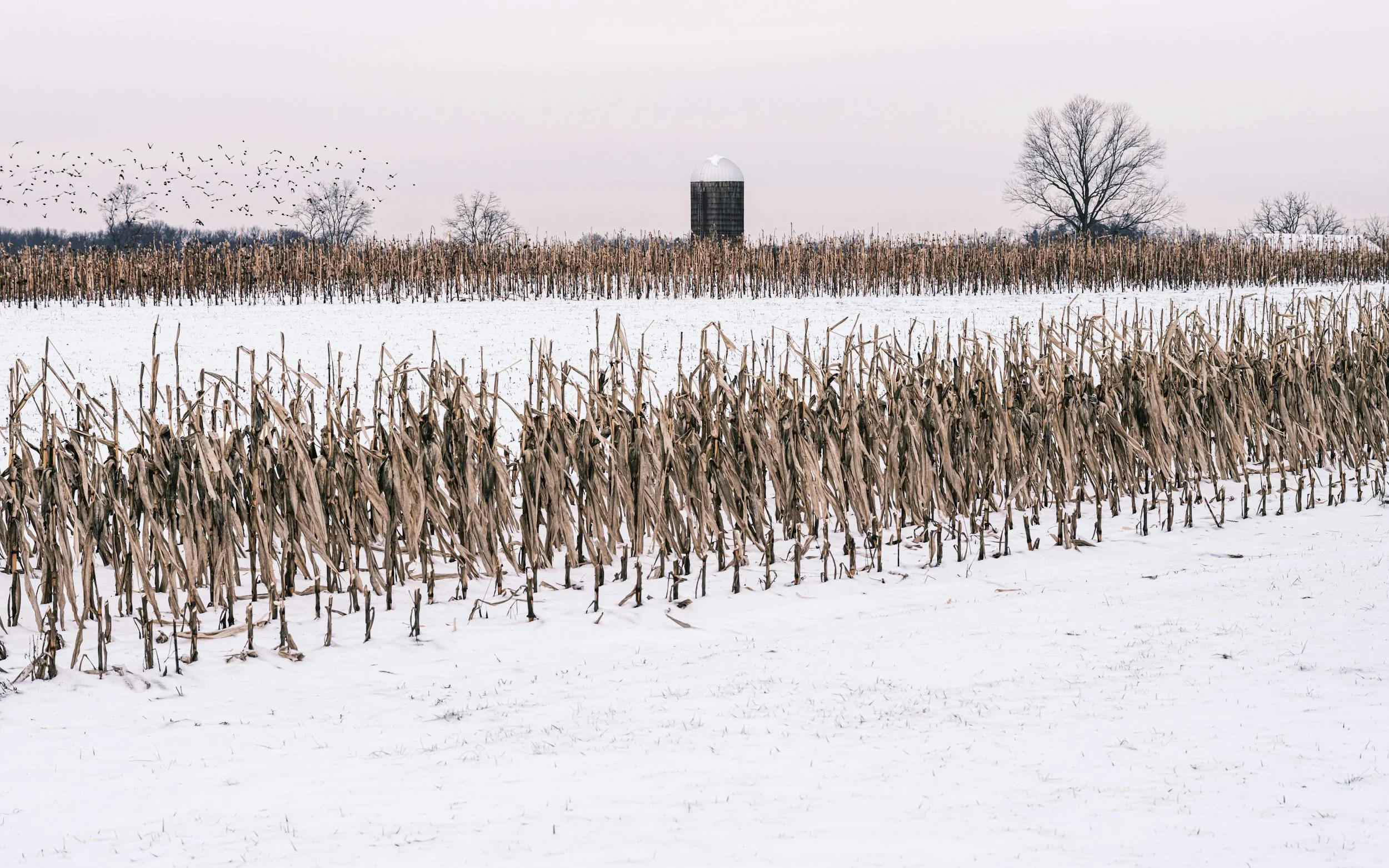
It’s official: winter has checked in for the season. Our first snow day arrived like a glittery holiday card—trees frosted, rooftops gleaming, and every fencepost dressed in its best white coat. Sure, beneath that blanket of snow there’s still plenty of honest-to-goodness Ohio mud waiting to steal a boot, but for a moment everything looked pristine, peaceful, and—dare we say—calm.
Every year I have the same internal debate: which season is my favorite? Spring’s optimism, summer’s long evenings, fall’s grand finale of color… they all have their charm. But few sights can compete with the hush of a fresh, white snowfall. And while most folks this time of year are dreaming of a white Christmas, those of us in the soil and water conservation world dream even bigger: a white winter—as in farm fields that stay white, not streaked with poorly timed manure applications.
Now before anyone clutches their pitchforks, let’s be clear: manure is a wonderful thing. It’s the original recycler—returning nutrients to the soil, boosting yields, and closing the loop long before “sustainability” was a buzzword. But those nutrients only help you when they stay on your fields. And for that to happen in winter, timing is everything.
We all know the post-harvest window seems to shrink a little more each year. There’s always one more chore to squeeze in, one more field to wrap up, and then suddenly the forecast swaps rainclouds for snowflakes. But here’s the good news: we still have a handful of workable days left before the ground freezes solid and stays that way. If your manure storage is nudging the “full” line, now is the time—yes, right now—to take advantage of any remaining non-frozen ground.
Because if farming has taught us anything, it’s this: Mother Nature does not RSVP. You never really know which day will be your last good spreading day. You just prepare, stay nimble, and when the weather hands you a window, you climb through it.


Why does all this matter? Because frozen and snow-covered ground is terrible at holding onto nutrients. Think of frozen soil like a frozen lasagna: absolutely nothing is soaking in. Those nutrients sit on top of the surface, waiting… and waiting… until a thaw or rain event sends them running downhill and downstream. What started as valuable fertilizer turns into pollution—fueling algal blooms, degrading water quality, and in the worst cases, contributing to fish kills. Here in Ashland County, manure in waterways remains one of our most common environmental impairments.
And let’s not forget the economic punch: losing nutrients to runoff is literally watching your fertilizer dollars wash away.
So this winter, let’s make a deal: plan ahead. Use these last workable days to empty storage and reduce the temptation to apply manure on frozen or snow-covered ground. Ashland SWCD never recommends winter spreading—but we also understand that sometimes “stuff happens.” Equipment breaks, weather shifts, storage fills. If an emergency application becomes truly unavoidable, the goal is to apply only the minimum amount needed to prevent an overflow until conditions improve.
Just remember—following the guidelines doesn’t remove responsibility. If manure from your field reaches state waters (creeks, streams, ditches, rivers), you are still on the hook. Keep solid records of every manure application for five years, and keep your soil and manure testing up to date. (Our office offers both soil tests and manure nutrient analysis—call us anytime!)
Below are Ohio’s winter application requirements when emergency application is absolutely necessary. Clip them. Stick them on the fridge. Tattoo them on the manure spreader—whatever works:
Emergency Winter Manure Application Guidelines
Injection or immediate incorporation is required, and application rates must not exceed 5,000 gallons per acre.
Fields must have at least 90% surface residue (typically cover crop or forage ground).
Choose the least risky fields—those with minimal slope.
Fields with over 6% slope must be applied in alternating 60–200 foot contour strips.
Do not apply manure to more than 20 contiguous acres.
Maintain setbacks of at least 200 feet from all surface water and 300 feet from wells, springs, and drinking water sources.
Rates must comply with the limits in Table 3, page 16 of NRCS Conservation Standard Code 590 (Nutrient Management).
Winter brings plenty of challenges—ice, snow, short days, frozen gate latches… but with smart planning and a little cooperation from the weather, winter doesn’t have to bring nutrient loss or waterway pollution.
Here’s to a safe, peaceful season—and to keeping those farm fields white all winter long, for reasons that protect both your bottom line and our county’s water quality.
If you have questions about soil testing, manure analysis, or winter application rules, your local Soil & Water Conservation District is always happy to help. After all, we’re dreaming of a white Christmas too—just maybe for slightly different reasons.